Serialization vs track-and-trace: what's the difference?

The two terms get used as if they mean the same thing. They do not. One gives a product its identity. The other records what happens to that identity as the product moves. Get the distinction wrong and you build the wrong system, which is how brands end up with a wall of serial numbers and no idea where any of the stock actually went. This article sets out exactly what each term means, how they fit together, and which one your compliance deadline is really asking for.
What is serialization?
Serialization is the process of assigning a unique, traceable identifier to each individual sellable unit of a product. Instead of every jar in a batch sharing one barcode, each jar carries its own distinct serial number. That number is the product's identity. It is the building block that makes everything downstream possible, and without it you cannot tell one unit apart from the next.
Think of serialization as giving every unit a passport. A standard batch barcode tells you the product is honey from lot 248. A serialised code tells you it is this specific jar, separate from the thousands of others printed in the same run. That granularity is what lets a brand verify a single unit, retire a code once it has been claimed, or spot the same number appearing twice. For a deeper walk-through of how this works in practice, see our guide to serialised QR codes.
What is track-and-trace?
Track-and-trace is the system that captures and records the movement of serialised units across the supply chain. It logs what happened, where, when, and why, building a continuous history for each unit from production through to the consumer. Serialization creates the identity. Track-and-trace is the journey written against that identity over time.
The GS1 EPCIS standard frames every supply chain event around four questions: what object, where it was, when it happened, and why. Each scan or recorded event adds a line to the product's history. Track is knowing where a unit is now. Trace is reconstructing where it has been. Together they turn a static label into an auditable record that updates as the product moves. This is the layer that sits beneath every meaningful definition of traceability.
How do serialization and track-and-trace work together?
They are sequential, not interchangeable. Serialization comes first because it assigns the unique identity. Track-and-trace comes second because it records events against that identity. You cannot trace a unit you have not serialised, and a serial number with no recorded events is just a label that goes nowhere. One is the noun, the other is the verb.
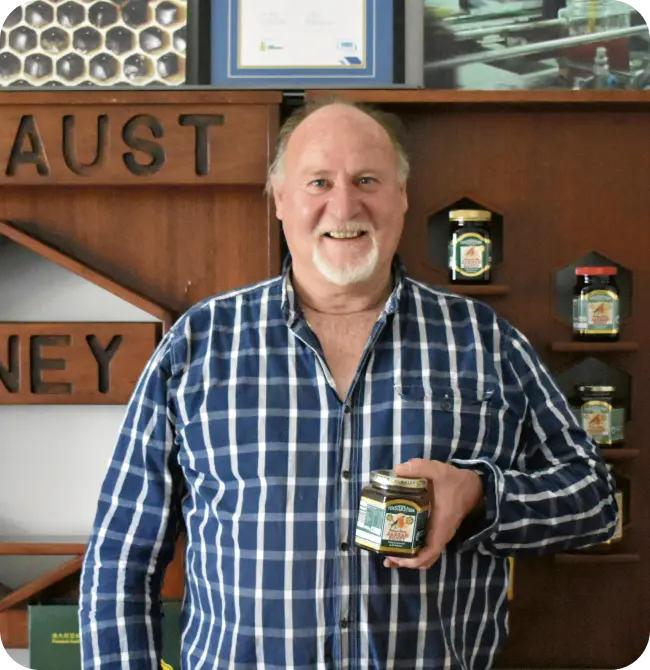
A worked example makes it concrete. Fewster's Farm Honey, one of Australia's most respected producers exporting across Asia, gave every jar a unique serialised QR code paired with a second hidden code. Serialization created two linked identities per jar. The track-and-trace layer then recorded each verification event, so a jar could only complete its chain when both codes were scanned and matched. Honey is one of the most counterfeited foods in the world, with an estimated 30 to 40 per cent of global supply adulterated or mislabelled in some way. Serialization alone would not have stopped a counterfeiter copying a code. Recording the events against it did.
Most food regulation asks for the track-and-trace layer, built on serialised or lot-level identity underneath. The three levels of traceability all depend on this pairing.
Which one does FSMA 204 require?
FSMA 204 is primarily a track-and-trace requirement built on lot-level identity. It does not mandate unit-level serialisation. It requires firms handling foods on the FDA Food Traceability List to record Critical Tracking Events and Key Data Elements, link them through Traceability Lot Codes, and produce the full records to the FDA within 24 hours of a request.
That 24-hour window is the part most teams underestimate. It is not enough to hold the data somewhere. You have to retrieve and assemble a complete, linked record, fast, across every facility the product touched. The compliance date is 20 July 2028, following a 30-month extension. Rhys puts the commercial case plainly: “Most companies treat compliance like a tax. The ones that don't are quietly building an advantage.” A track-and-trace system clean enough to satisfy the FDA is usually clean enough to tighten recalls, sharpen forecasting, and become something buyers ask for. See how this maps to the rule on our FSMA 204 page.
If you are mapping your supply chain to the 20 July 2028 FSMA 204 deadline, start by deciding which layer the rule actually asks of you, then build the record once, and generate your GS1 2D barcodes at orijinplus.global.
Frequently Asked Questions
Is serialization the same as a barcode?
No. A standard barcode usually identifies a product type or a batch, so every unit in that batch shares the same code. Serialization assigns a unique identifier to each individual unit, so no two items carry the same number. A barcode can encode a serial number, but the serial number is the identity, not the symbol that holds it.
Can you have track-and-trace without serialization?
You can run track-and-trace at lot level without serialising every unit, which is what most food rules expect. FSMA 204 works on Traceability Lot Codes rather than unit-level serials. But you cannot trace at the level of an individual item without first serialising that item. The depth of identity you assign sets the depth of tracing you can achieve.
Does FSMA 204 require unit-level serialization?
No. FSMA 204 is built on lot-level traceability through Traceability Lot Codes, not unique serial numbers on every sellable unit. It asks firms to record Critical Tracking Events and Key Data Elements and link them across the supply chain. Unit-level serialisation is useful for anti-counterfeiting and verification, but it is not what the FDA rule mandates.
What is the 24-hour rule in FSMA 204?
Firms handling foods on the FDA Food Traceability List must provide complete, linked traceability records to the FDA within 24 hours of a request, or within a reasonable agreed time. The records must cover the relevant Critical Tracking Events and Key Data Elements. The compliance date is 20 July 2028.
Why does the difference between the two matter commercially?
Building for the wrong one wastes money. Serialising every unit when the regulation only asks for lot-level tracing adds cost you may not need. Building track-and-trace on weak identity leaves gaps a recall or an audit will expose. Knowing which layer your deadline requires lets you build once, correctly, rather than twice.
How does connected packaging support both?
A single 2D barcode on-pack can carry a serialised identity and act as the capture point for track-and-trace events. Each scan records what happened, where, and when, against that identity. The same code can serve verification, traceability records, and consumer content, so one piece of packaging supports identity and journey at once.