
EDWL
EU Digital Wine Labelling
Prepare your products for Digital Product Passport requirements through connected packaging and traceability.
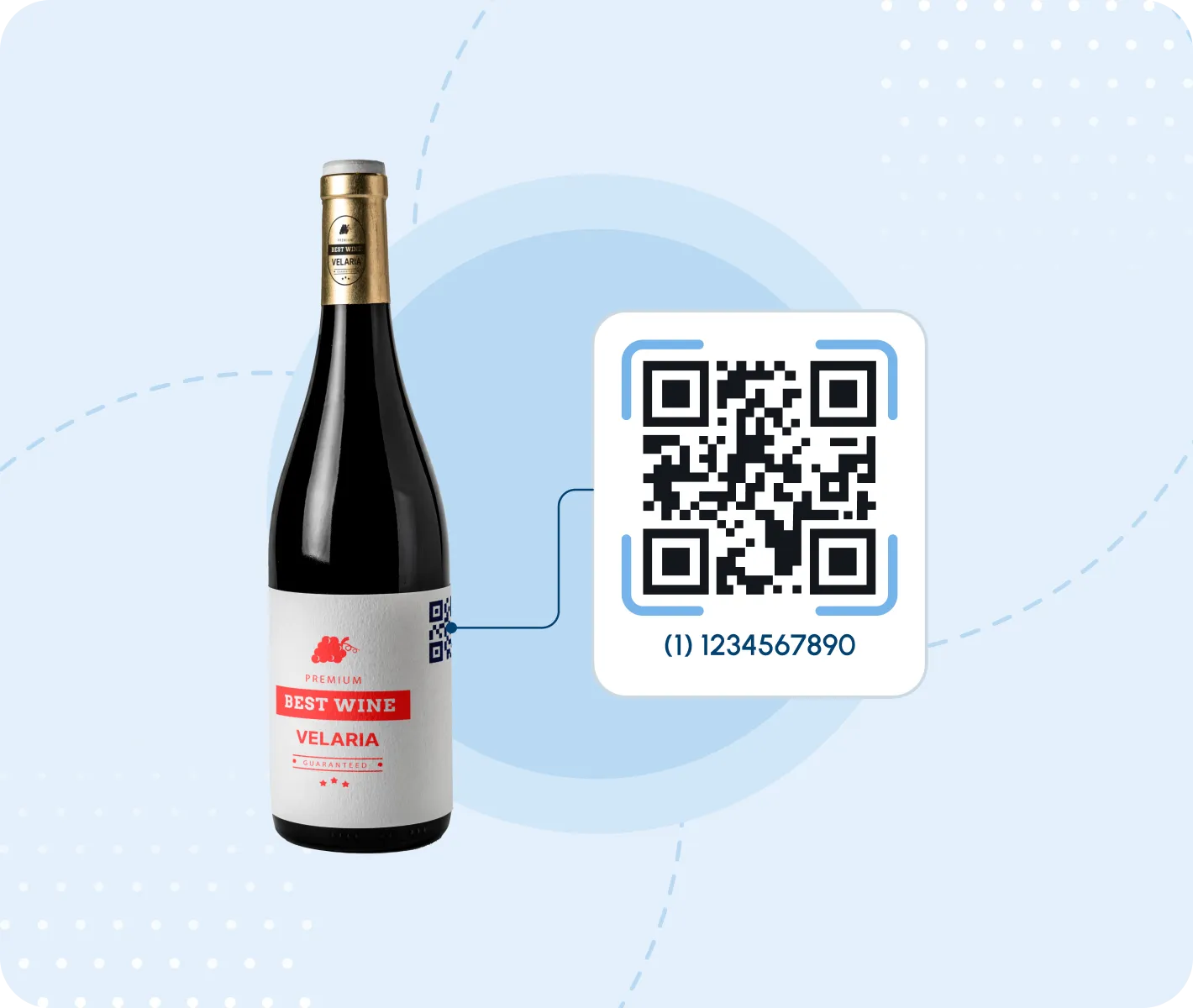
What is EU Digital Wine Labelling?
EU digital wine labelling requirements were introduced under Regulation (EU) 2021/2117 to improve transparency for wine consumers across the European Union. The regulation allows mandatory ingredient lists and nutritional information to be provided digitally, rather than printed on-pack, provided the information is accessed via a digital link such as a QR code and presented in a non-promotional, compliant format.
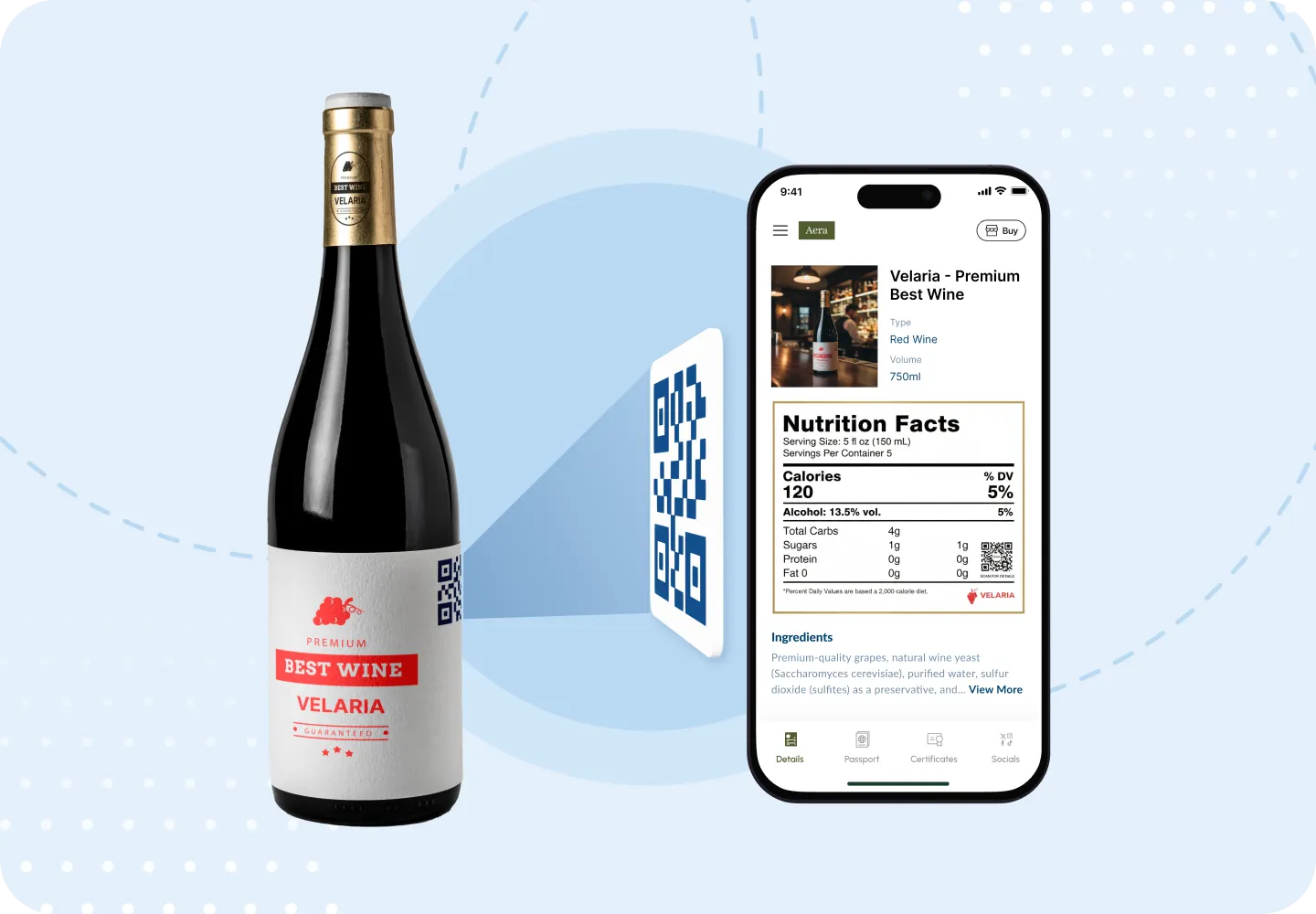
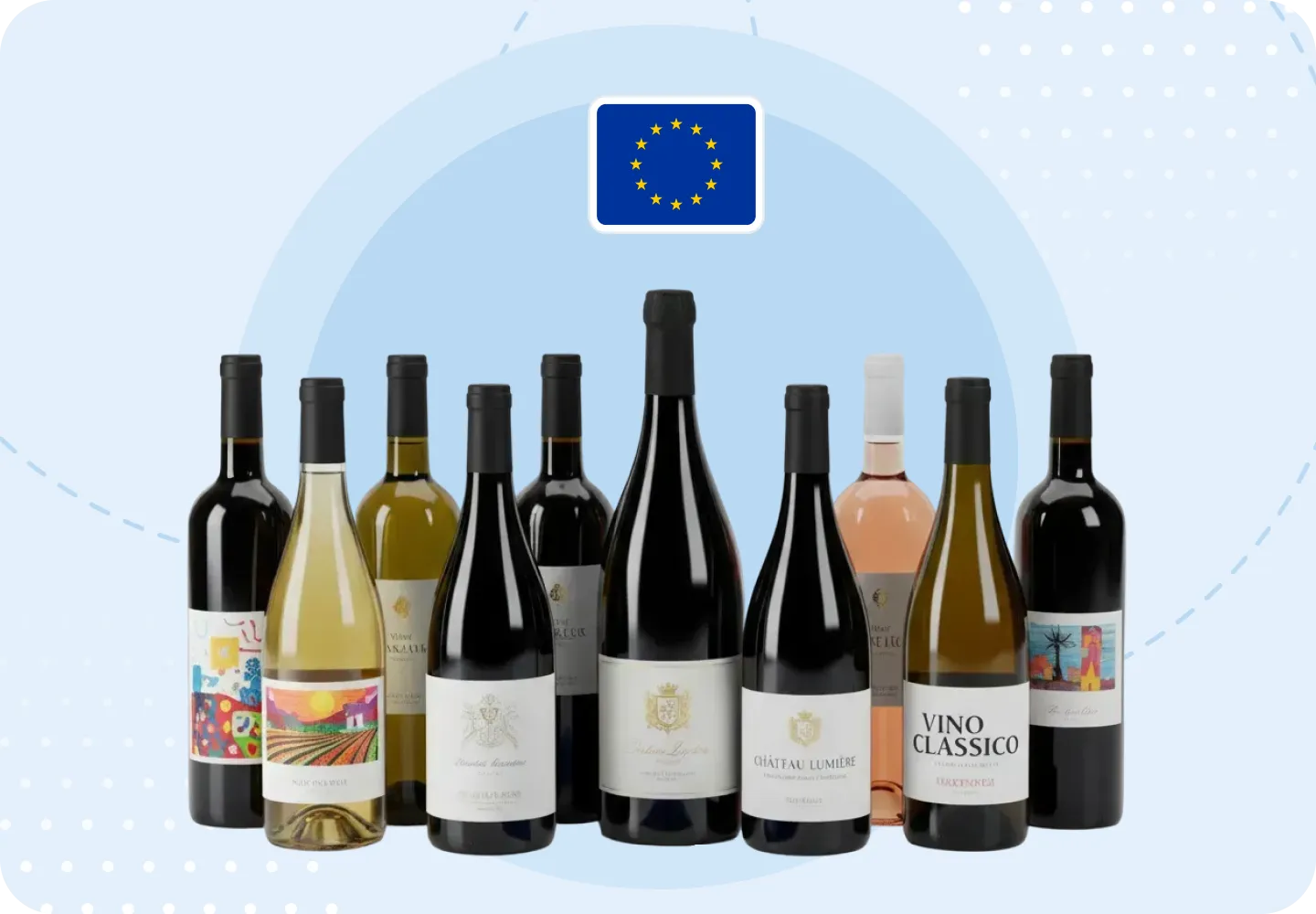
Who it Applies to and When
The requirements apply to wines and aromatised wine products produced in or imported into the EU. Mandatory obligations apply to products placed on the EU market from 8 December 2023 onwards. While certain information must still appear on physical labels, ingredient and nutritional information may be delivered digitally under defined conditions that restrict marketing content and data collection.
How Orijin Plus Supports EU Digital Wine Labelling Readiness
Orijin Plus helps brands meet requirements with a connected packaging platform that manages traceability and product data.
Regional Compliance Routing Within The EU
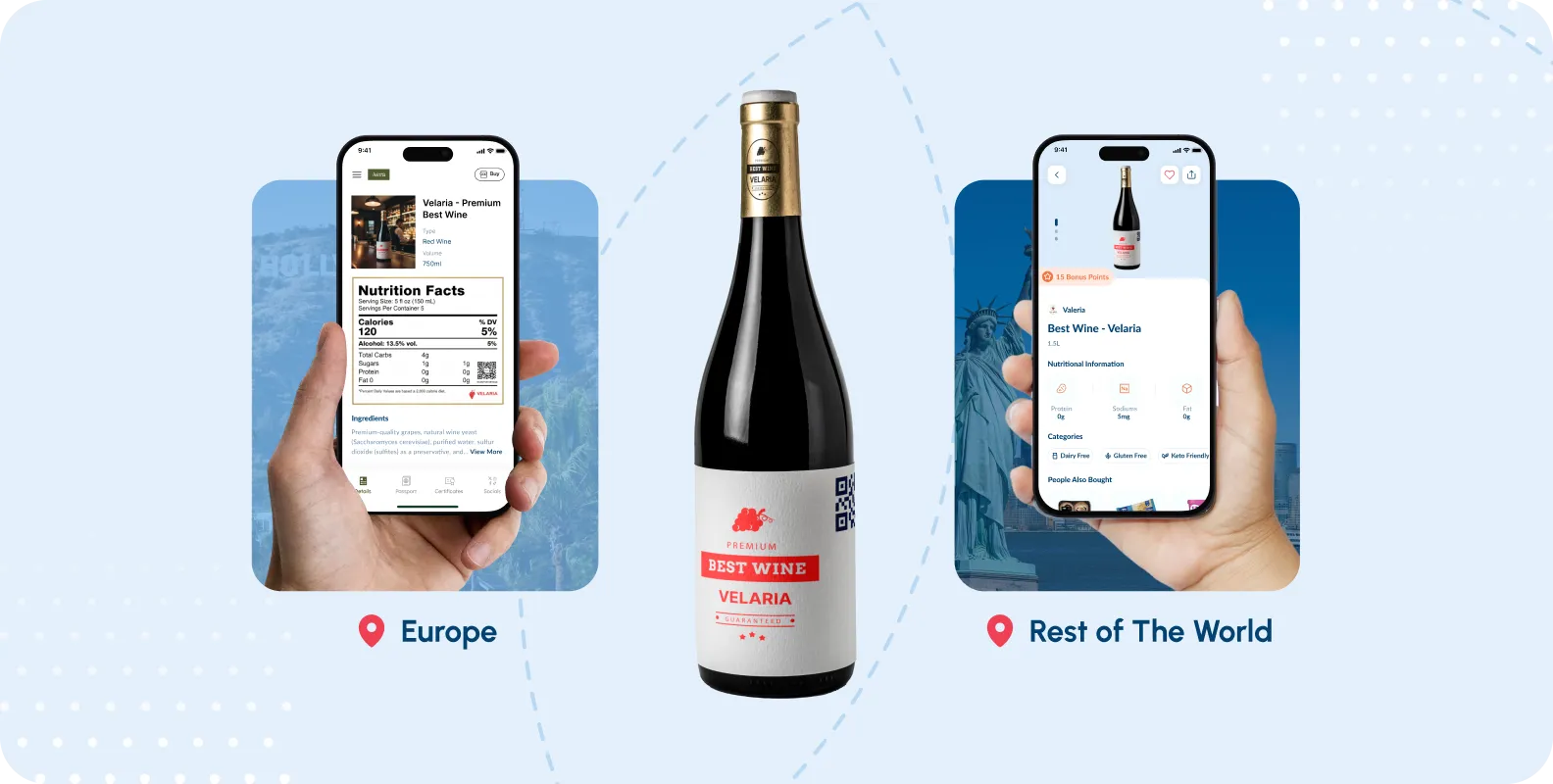
Orijin Plus allows brands to serve a compliant digital wine label experience to EU consumers that meets regulatory expectations around content, neutrality, and data use. When a product is scanned within the EU, consumers are routed to a regulation-safe digital label that focuses strictly on mandatory information.
Brand-led Experiences Outside Regulated Markets
Outside the EU, the same QR code can resolve to a brand-controlled WebApp experience. This allows wineries to share richer product stories, provenance, and engagement features where regulations permit, without compromising EU compliance.
Single or Dual QR Code Strategies
Orijin Plus supports both single QR code strategies with intelligent routing and dual QR code configurations where brands choose or are required to separate compliance and brand experiences. This gives producers flexibility across markets, vintages, and distribution models without redesigning their entire packaging system.
The Brands That Will Lead 2027 Are Already Getting Ready
Free to start. Live in days. No credit card, no commitment.
Get Compliant Today