Product digitisation: connecting brands and consumers

Most packaging tells the shopper almost nothing. A name, a few claims, an ingredients panel printed once and frozen at the factory. The product then travels thousands of miles to a shelf, and the brand loses sight of it the moment it leaves the dock. Product digitisation closes that gap. It gives every item a live digital identity that a shopper can open with one scan. This article explains what product digitisation is, why it matters for consumer engagement, and how brands connect compliance data and brand storytelling through a single code.
What is product digitisation?
Product digitisation means giving a physical product a connected digital identity, usually through a 2D barcode or QR code on pack. Instead of a static label, the product links to web content that can be updated at any time. One scan can carry product identity, batch data, compliance disclosures, and brand content, all from the same printed code.
The shift matters because the barcode has done one job for fifty years. It held a number for the till. A digitised product does far more. The code resolves to a destination that the brand controls, so the information attached to the product is no longer fixed at print time.
A recipe can change with the season. A disclosure can update when a regulation does. The same code that clears checkout can also answer the question a shopper is actually asking while holding the pack.
Why does product digitisation matter for engagement?
It matters because shoppers now expect to look products up, and they reward the brands that let them. A 2024 GS1 US Consumer Pulse Survey found 79% of shoppers are more likely to buy a product with a scannable code that gives them the information they want. Digitisation turns that demand into a direct line between brand and buyer.
The old problem was distance. A brand could sell millions of units and never meet a single buyer, because the supermarket sat in the middle and kept the relationship. A digitised product removes that wall. When someone scans, the brand learns who they are, what they wanted to know, and where they were standing.
Across 50 countries, QR code scans grew 57% year on year, so the behaviour is already mainstream. The question for brands is no longer whether people scan. It is whether the scan leads somewhere worth the effort.
How do brands connect compliance and consumer engagement?
Through a single code that serves the right content to the right audience. The same digitised product can show a regulator the batch and disclosure data it requires, and show a shopper a recipe, a reward, or the story behind the brand. Compliance becomes the reason the code goes on pack. Engagement is what the brand builds on top of it.
This is where digitisation earns its keep. Many brands first adopt a connected code to meet a requirement, whether that is a digital product passport, an ingredient disclosure, or readiness for 2D barcodes at checkout. The same infrastructure then carries the marketing layer at no extra packaging cost.
James Williamson, co-founder and CEO of Orijin Plus, puts the relationship plainly.
That second life of the data is the point. Information collected to satisfy a rule can be surfaced to a buyer as a reason to choose the product again. Brands that treat the two as one system, rather than two projects, get the return on the same spend.
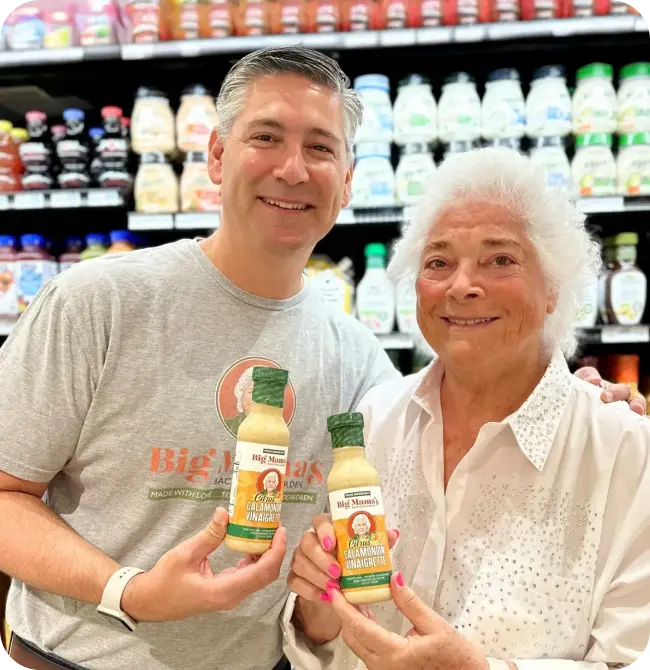
Big Mama Foods, a family condiment brand built on a 40-year backyard garden in Miami, took exactly this view of connected packaging. Founder Ethan Shapiro saw the product itself as the channel.
What can a digitised product actually do?
A digitised product can change its content by market, batch, or season, all from one printed code. In one region it can serve a compliant disclosure. In another it can run a seasonal campaign or a loyalty reward. The brand updates the destination, not the packaging, so the product keeps working long after it ships.
Global industry backing tells you the direction of travel. GS1 ran pilots in 48 countries covering 88% of the world's GDP, and 20 of the world's biggest companies, including Procter & Gamble, L'Oréal, and Nestlé, signed a joint statement supporting the move to next-generation barcodes. The infrastructure is arriving for every brand, not just the largest. A small producer can give a jar of honey the same connected identity that a multinational gives a flagship line.
If you are ready to give your products a connected identity, start with the code and build the consumer experience on top of it. The same scan can carry your compliance data and your brand story.
FAQ
What does it mean to digitise a product?
Digitising a product means attaching a connected digital identity to a physical item, usually through a QR code or 2D barcode. The code links to a web destination the brand controls, so the product can carry identity, batch data, compliance information, and brand content that updates after the product has shipped.
Is product digitisation the same as a digital product passport?
No. A digital product passport is a specific structured record required under certain regulations, starting with non-food categories in the EU. Product digitisation is the broader practice of giving any product a connected identity. A passport is one type of content a digitised product can carry.
Do you need to redesign packaging to digitise a product?
No. Most brands add a single 2D barcode or QR code to existing packaging. The connected content sits at a web destination the brand controls, so updates happen online rather than on pack. The product does not need reprinting each time the message or disclosure changes.
How does a digitised product help small brands?
It gives small brands a direct line to buyers they would otherwise never meet. A scan can capture a consumer's contact details, surface the brand's story, and offer a reward, building first-party data from shoppers who picked the product off a shelf and never visited the website.
Can one code serve different content in different markets?
Yes. A connected code can route a shopper to compliant disclosures in a regulated market and to brand content or rewards elsewhere, all from the same printed code. This matters for exporters who sell into regions with different labelling rules but want one packaging run.
Does product digitisation work at supermarket checkout?
Yes. A QR code built to the GS1 Digital Link standard carries the product number that tills read at point of sale, while the same code links to the brand's web content. Retailers have set a target to accept these codes at checkout by the end of 2027.
What information can a shopper see when they scan?
A shopper can see whatever the brand chooses to publish: ingredients and nutrition, sourcing and origin, recipes and pairings, certifications, loyalty rewards, and the brand story. Because the content is web-based, it can be tailored to the market and updated whenever the brand needs.