How to choose Digital Product Passport software (buyer's guide)

The EU Ecodesign for Sustainable Products Regulation will require Digital Product Passports across category after category, with the textiles delegated act expected around 2027 and compliance landing from roughly mid-2028. Most brands are not ready. Software vendors know this, and the pitches are getting loud. This guide gives you a vendor-neutral framework of six criteria and the exact questions to ask, so you can tell a real compliance platform from a thin QR code wrapper. We close with Orijin Plus measured against the same framework, so you can judge it on the criteria rather than the marketing.
What should a Digital Product Passport actually do?
A Digital Product Passport holds structured product data across the lifecycle and makes it accessible through a digital link on the product, usually a QR code. Under the EU ESPR it must carry information such as materials, origin, and repair or recycling guidance, presented in a compliant, machine-readable form that regulators, supply chain partners, and consumers can query.
Before you assess software, get clear on the job. A DPP is not a marketing landing page with a barcode on top. It is a structured record tied to a unique product identifier, served through a resolver so the right data reaches the right audience. If you want the full primer, start with our explainer on what a Digital Product Passport is and then read what data goes inside a DPP. Once you know the job, the criteria below tell you which vendor can do it.
Criterion one: does it manage structured product data, not just links?
The first test is data. A real DPP platform stores and structures product information such as bill of materials, supplier records, and lifecycle attributes, then maps that data to a digital link. A weak one only generates a code that points at a static page. KPMG found 81% of European companies lack the structured lifecycle data DPP compliance requires, so data management is the hard part.
Ask the vendor to show you the data model. Where does materials information live, how is it versioned, and can you update it without reprinting packaging? If the answer is a single web page behind a QR code, that is a brochure, not a passport. The data layer is what separates a compliance tool from a clever sticker.
Questions to ask: How is product data structured and stored? Can I update disclosures after print? How do you handle bill of materials and supplier records?
Criterion two: does it support GS1 Digital Link and a managed resolver?
The access mechanism for most DPPs is a GS1 2D barcode built on a GS1 Digital Link URI, paired with a resolver that routes each scan. The URI handles point of sale on its own. The resolver handles everything beyond checkout, serving different content to regulators, supply chain partners, and consumers from the same physical code. Without a resolver you cannot route by audience, market, or batch.
This is where buyers get misled. A vendor can claim GS1 support and only mean a basic QR code. Ask whether they provide a managed resolver, whether it routes by geography and batch, and whether the code works at checkout without an online connection. The GS1 standard is explicit that identifiers can be extracted without any online connection, so checkout is the easy part. The resolver is what makes the web layer work.
Questions to ask: Do you run a managed resolver? Can one code serve different content by market? Does the code parse at POS offline?
Criterion three: does it cover more than one regulation?
Few brands face only one rule. A buyer selling across markets may face EU DPP, plus wine labelling, plus a French recyclability requirement, plus a US state disclosure law. A platform that handles each regulation in a separate system creates duplicate work and version drift. The stronger choice manages multiple compliance verticals from one product record and one code.
Rhys puts the test simply. One platform should carry all your compliance verticals, because the multi-vertical stack is genuinely rare and it is where most of the hidden cost sits. Ask the vendor which regulations they support today, not on a roadmap. Then ask whether a single code on a single product can satisfy more than one of them at once. If you have to manage a separate code and a separate login per rule, your team carries that overhead forever.
Questions to ask: Which regulations do you support now? Can one code serve several at once? Where does version control live?
Criterion four: does it serve consumers as well as regulators?
The same code that answers a regulator can answer a shopper. A passport that only delivers a compliance disclosure wastes the most valuable surface a brand owns. The better platforms let the product tell its story, run promotions, and capture first-party data, while keeping mandatory disclosures compliant and non-promotional where the law requires it.
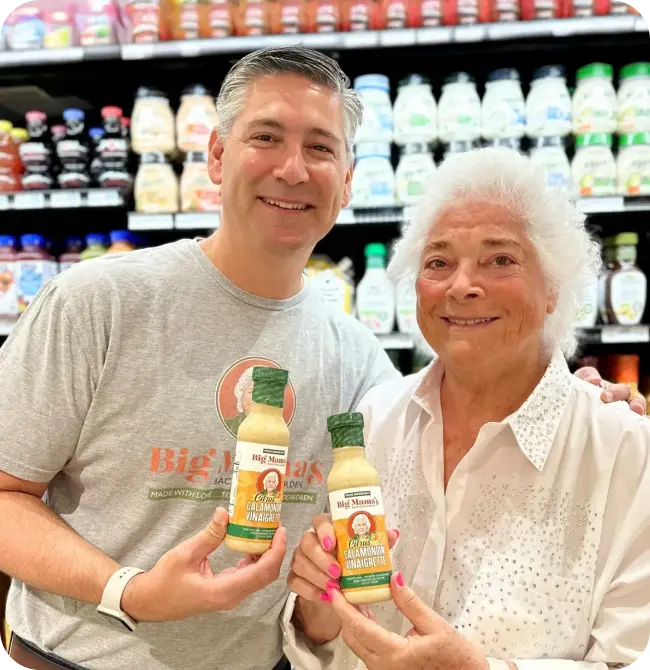
Rhys frames compliance as a commercial advantage, not a tax, and the brands that treat it that way quietly build an edge. Big Mama Foods chose Orijin Plus for exactly this reason.
Ask whether the platform can serve a compliant disclosure in one market and a brand experience in another from one code. That single capability is often the difference between a cost centre and a return. For the wider case, see the benefits and ROI of a DPP.
Questions to ask: Can one code do compliance and engagement? Do I get first-party scan data? Can content differ by market?
Criterion five: does it fit a mid-market brand, not just an enterprise?
Implementation cost and fit matter as much as features. Some platforms are built for enterprise rollouts with long onboarding and heavy services. A mid-market brand needs something it can activate quickly, run without a dedicated compliance team, and afford without a six-figure project. The right tool removes the packaging redesign barrier entirely.
Rhys is direct on this. The building blocks already exist; they just need connecting in the right way.
Ask the vendor how long onboarding takes for a brand your size, whether you keep your existing packaging, and what the real total cost is including services. A platform that demands a redesign and a consultancy engagement is solving its own revenue problem, not yours. Traceability platforms are infrastructure, so they should reduce your workload, not add a project.
Questions to ask: How long is onboarding for a brand my size? Do I keep my current packaging? What is the all-in cost?
Criterion six: is the data ready for AI and machine querying?
AI shopping agents increasingly read product data to make recommendations and verify claims. A DPP built on structured, authoritative data through a resolver becomes the source those agents trust. A passport that is just a human-readable web page is invisible to them. Future readiness means the data is machine-queryable, not only human-friendly.
This is the criterion most buyers skip, and it is the one that ages best. The DPP software market is forecast to grow from 185.9 million US dollars in 2024 to 1,780.5 million by 2030, a 45.7% compound annual rate, which tells you how fast the data layer is becoming standard infrastructure. Ask the vendor whether their resolver returns structured, machine-readable data, and whether product information is exposed in a form an AI agent can query directly. If the answer is vague, the platform is built for the last era, not the next.
Questions to ask: Is the data machine-readable through the resolver? Can an AI agent query it? Is it structured to a recognised standard?
How Orijin Plus measures against the framework
Orijin Plus is a connected packaging compliance platform that manages structured product data, generates GS1 Digital Link QR codes with a managed resolver on every plan tier, covers multiple compliance verticals from one code, and serves both regulators and consumers. It is built for mid-market brands without a redesign, with data structured for machine querying.
Against the six criteria: it manages structured product data across raw materials and manufacturing, not just links. It generates GS1-compliant codes with a managed resolver that routes by audience, market, and batch. It handles EU DPP alongside other verticals through the same product record. It serves compliant disclosures and consumer experiences from one code. It is built to activate quickly for mid-market brands on existing packaging. The resolver returns structured data that AI agents can query.
If you are preparing for the EU Digital Product Passport, run every vendor through these six criteria before you sign, then see how the Orijin Plus DPP solution measures up against them.
FAQ
What is Digital Product Passport software?
Digital Product Passport software stores structured product data across the lifecycle and makes it accessible through a digital link on the product, usually a GS1 2D barcode. It manages information such as materials, origin, and recycling guidance, and serves that data in a compliant, machine-readable form to regulators, supply chain partners, and consumers.
What features should DPP software have?
Strong DPP software manages structured product data rather than just links, supports GS1 Digital Link with a managed resolver, covers more than one regulation from one code, serves both compliance and consumer content, fits mid-market budgets without a packaging redesign, and exposes data in a machine-readable form that AI agents can query.
Do I need a resolver for DPP compliance?
A QR code with a properly structured GS1 Digital Link URI satisfies point of sale on its own, with no resolver required. A resolver is needed for everything beyond checkout, including serving consumer content, routing data by market or batch, and making product information visible to AI shopping agents. Most real DPP use cases need one.
How much does DPP software cost?
Cost varies widely by vendor and brand size. Enterprise platforms often carry long onboarding and heavy services fees, while mid-market tools activate faster and avoid a packaging redesign. When comparing, ask for the all-in figure including onboarding and services, not just the headline subscription, and confirm whether you keep your current packaging.
When does the EU Digital Product Passport apply?
DPP obligations arrive progressively by category under the EU ESPR. The textiles delegated act is expected around 2027, with mandatory compliance realistically landing from mid-2028, roughly 18 months after the act enters force. Electronics, batteries, and other categories follow on their own timelines. Food and beverage are not directly covered yet.
Can one platform handle DPP and other regulations?
Yes, and this is a key buying criterion. A single platform can manage EU DPP alongside requirements such as wine labelling or state disclosure laws from one product record and one code. Managing each rule in a separate system creates duplicate work and version drift, so multi-vertical coverage saves real ongoing cost.
How do I know if a DPP vendor is genuine?
Ask to see the data model, not just the QR code. A genuine platform stores and structures product data, runs a managed resolver, and supports more than one regulation today rather than on a roadmap. If the product is a code pointing at a static page with no underlying data management, it is a brochure, not a passport.