Chain-of-custody models explained

Two brands can both claim their cocoa is deforestation-free and mean completely different things by it. One physically keeps its certified beans apart from everything else. The other buys a certificate that says an equivalent volume was produced somewhere in the system. The difference is the chain-of-custody model, and regulators increasingly care which one you use. This article covers the four recognised models, what each one proves, and when each applies.
What is a chain-of-custody model?
A chain-of-custody model is the rulebook that defines how a product's certified or verified status travels through the supply chain. It sets out whether certified material must stay physically separate, can be mixed with equivalent volumes, or can be tracked only on paper. The model you choose decides what claim you are allowed to make at the end.
Chain of custody is the operational layer beneath any traceability programme. Traceability tells you where something came from, transparency is what you choose to show, and the chain-of-custody model is the agreed method that makes the origin claim defensible.
Standards bodies recognise four models. They sit on a spectrum from strictest physical control to no physical link at all.
How does identity preservation work?
Identity preservation is the strictest model. Certified material from a single source is kept physically separate at every step, never mixed with material from any other source, certified or not. Each batch can be traced back to one farm, plot, or producer. The product on the shelf is the exact material that left that origin.
This model applies when origin itself is the claim. Single-origin coffee, single-estate honey, and provenance-led premium foods all depend on it.
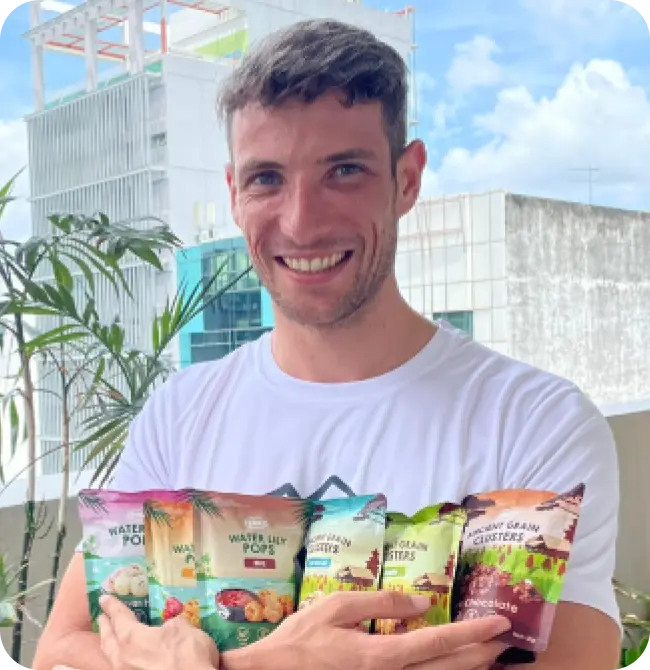
ZENKO Superfoods captured verifiable harvest data from individual Himalayan growers using GPS IoT trackers, so each consignment of Water Lily Pops carries its own origin record through to the pack. Founder Wouter Duyck saw the transparency and the consumer connection as one system.
When does segregation apply?
Segregation allows certified material from different certified sources to be mixed, as long as it never touches non-certified material. Everything in the batch meets the same standard, but it no longer traces to one single origin. It proves the finished product is 100% certified without preserving individual provenance.
Segregation applies when the standard matters more than the specific farm. The EU Deforestation Regulation requires it outright. Deforestation-free commodities must be kept separate from commodities of unknown or non-compliant origin at every step of transport and storage until they enter the EU. Coffee, cocoa, soya, palm oil, cattle, wood, and rubber all fall under this rule.
What is mass balance, and where is it banned?
Mass balance lets certified and non-certified material mix physically, while the certified volume entering an operation is matched by an equal volume sold as certified. The molecules in the final product may not be the certified ones. The accounting guarantees the volumes balance, not that any specific unit is certified.
Mass balance is common in palm oil and complex processed-ingredient supply chains where full physical separation is impractical. It is also where regulators draw a hard line. The EU Deforestation Regulation explicitly does not allow mass balance, because mixing deforestation-free material with material of unknown origin cannot guarantee the product placed on the market is deforestation-free.
How does book-and-claim differ?
Book-and-claim breaks the physical link entirely. A producer generates a certificate for the sustainable volume they made, and a buyer elsewhere purchases that certificate to claim the environmental benefit. The physical product and the claim travel separately. It funds certified production without tracing a single physical unit.
Book-and-claim applies where physical delivery is impossible or uneconomic. Sustainable aviation fuel is the clearest case. SAF made up just 0.6% of aviation fuel supplied at EU airports in 2024, around 193 kilotonnes, with a mandatory 2% target from 2025, so airlines book-and-claim the benefit rather than wait for physical fuel at their gate. The trade-off is that book-and-claim makes the weakest origin claim of the four.
How do brands run more than one model at once?
Most brands operate across several models at once because different markets and ingredients demand different rules. A single connected-packaging layer can carry the right record for each. Origin data sits with the product, linked across supply chain events, and the QR code serves the claim that matches the market scanning it.
This is the multi-vertical reality. A wine exporter answers EU digital labelling rules, mandatory across the EU market since 8 December 2023, while the same code serves marketing content elsewhere. A food brand preparing for FSMA 204 keeps lot-level records linked through transformations. A commodity importer proves EUDR segregation with geolocation data.
James Williamson, co-founder of Orijin Plus, frames it this way. When traceability is clean enough for compliance, it is usually clean enough to become a customer promise. Surface what you already track internally and it turns into something buyers care about.
If you are mapping which chain-of-custody model each of your markets demands, start by naming the model you are actually running today. Connected packaging then carries the right claim for each market from one code.
FAQ
What are the four chain-of-custody models?
The four recognised models are identity preservation, segregation, mass balance, and book-and-claim. They sit on a spectrum from strictest to loosest. Identity preservation keeps material from one source physically separate. Segregation mixes certified sources only. Mass balance matches volumes while allowing physical mixing. Book-and-claim separates the certificate from the physical product entirely.
Which model gives the strongest origin claim?
Identity preservation gives the strongest claim because the product on the shelf is the exact material that left a single named source, traceable back to one farm or plot. Book-and-claim gives the weakest, because the certificate and the physical product travel separately and never need to meet. Segregation and mass balance sit in between.
Why does the EU Deforestation Regulation ban mass balance?
The EU Deforestation Regulation bans mass balance because mixing deforestation-free commodities with material of unknown or non-compliant origin cannot guarantee the product placed on the EU market is genuinely deforestation-free. The regulation requires physical segregation at every step of transport and storage, plus geolocation data for the plots where commodities were produced.
Is mass balance ever acceptable?
Yes. Mass balance is widely accepted in voluntary certification for palm oil and complex processed ingredients, where full physical separation is impractical or expensive. It is a legitimate model recognised by standards bodies. The issue is regulatory fit. Some regulations, including the EU Deforestation Regulation, require stricter segregation and reject mass balance for compliance purposes.
When should a brand use book-and-claim?
Book-and-claim suits supply chains where physical delivery of the certified product is impossible or uneconomic, such as sustainable aviation fuel or renewable electricity. It lets buyers fund and claim sustainability benefits without taking physical possession. It is not suitable where a regulation or buyer expects the physical product itself to be traceable and verifiably compliant.
Does my chain-of-custody model change my packaging?
No. The model determines how your records and physical material are handled upstream, not what your pack looks like. A single 2D barcode can carry whichever claim applies in each market, serving compliant origin information where it is required and brand content elsewhere, without a packaging redesign for each model or region.
How does connected packaging support chain of custody?
Connected packaging links each pack to the supply chain records behind it. Lot numbers, origin data, geolocation, and certification status are captured and connected through a traceability layer, then made retrievable at the scan. This lets a brand prove the right claim for the right model and market from one permanent code, rather than managing separate systems per requirement.